
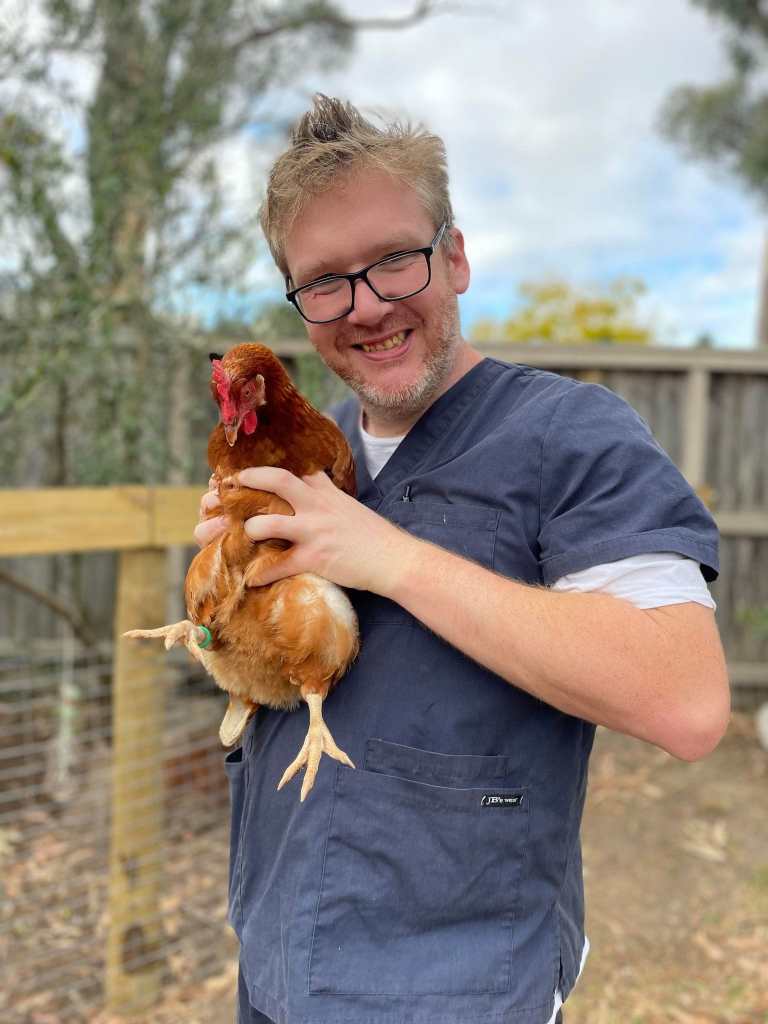
Dale is a Frankston emergency medicine trainee at his core with most of his training completed at Peninsula Health. He was successful at his first attempt in the 2022.1 OSCE which he sat soon after passing his written exam (also at the first attempt). Dale has worked at Peninsula Health for 10 years, completing all core ACEM requirements other than tertiary time within Peninsula Health. He lives on the Mornington Peninsula with his wife, and 3 children. When not working, Dale enjoys spending time at the beach with his kids, tending to his chickens and gardening.
Can you talk to us a little bit about how you planned your preparation?
It was a bit of a whirlwind actually. I had been thinking about sitting since 2019, but with the arrival of my second son in 2020 I felt that I couldn’t really commit to the preparation. I decided that I would sit for 2021 in late 2020 after my wife had finished her Masters, and was able to spend more time with the kids. I had a really great FACEM mentor at the time who was very encouraging and took the time to speak with my wife about what the commitment would be, and how the year would be spent, as well about all the positives at the end!
For the Fellowship written I wanted to do 1000 hours of preparation, because that had been my target for the Primary exams and had worked well for me. I spent a lot of time time-tabling with my wife working out how to juggle the time, while still allowing for school drop-offs, weekends away and down time. I think this was really important step in the whole process to set the expectations for both of us, and to ensure there wasn’t any conflict. We both agreed that if either of us felt that family life was suffering due to the exam we would have to rethink the approach.
What were some key habits and practice methods that you employed to succeed?
I must say it was a bit chaotic at the beginning! There’s so many resources out there, and so many people giving opinions on what is the right way to do things. I figured to begin with I needed to know what I needed to know, so read through the curriculum to determine the level of knowledge required for each subject/domain. Once I had a rough idea, I made a list of the things that I knew I needed to work on, and made a point that half of my daily revision time would be spent on that, while the other half would be spent on practice exams. I would do a practice question answer as best I could, then read through the relevant chapter on Dunn (and often times watch some youtube videos to clarify anything!) then make notes. I liked the free version of Evernote online to make notes in my own words, because I could add pictures and diagrams that I’d made that worked for me, and could then view my notes from any device.
Completing practice exam questions with my peers was probably some of the most valuable preparation. It’s a bit nerve wracking at first because there’s this element of fear and embarrassment – nobody wants to make a mistake in front of their peers! But eventually you realise that everybody feels the same way and really it’s such good practice and I found that when you get something wrong, or make an error it’s such a good way to remember and learn so I recommend getting stuck into practice exams as much as possible as early as possible.
When I couldn’t get anyone to practice with, I would record myself answering questions to time. I would then listen back and mark myself against the marking guide. It’s amazing the strange things you say under pressure as well as the mannerisms!
You had a young family with your 3rd child due barely 2 weeks after your OSCE sitting. There must have been some pressure there for success. Any tips for trainees out there who are facing this as parents?
Of course there’s a lot of pressure right near the end of the campaign but in the end there’s far more important things in life than exams. I made a point of keeping my routines with the kids through the whole preparation. Even if I was up early in the morning to revise, I’d take a break to make breakfast, put them in the bath and take them to school and daycare. Having a balance made it so much easier on me and the family.
What resources were of most use in your OSCE preparation?
- My wife – an endless source of support, encouragement and patience. The fellowship exam is an exam for the whole family!
- Emergency Medicine Manual Online – people have strong opinions on the formatting, but most exam questions and factoids come directly from this source
- Cabrini fellowship exam page – when you’re feeling low on motivation, running through the practice drills can give you that little bit of inspiration to push on
- EDvivas.com – it’s a primary exam website, but it has this very nice tool for fellowship written where they’ve aggregated a whole bunch of previous questions then tagged them by topic. For exam you can search “psychiatry” or “paediatrics” and it will pop up all the past questions with a theme of psychiatry or paeds
- The OSCE preparation team at Peninsula Health were invaluable! They have a wealth of knowledge, and are very talented in providing high level feedback and education.

 frankstonosce.org